
Charging Systems Matched to Your Electrical Capacity
EV Charger Installation throughout Madison to Blue Hill, and surrounding areas for residential properties and commercial sites needing reliable vehicle charging infrastructure
Installing an EV charger requires evaluating your property's existing electrical system to determine whether it can support the additional load without upgrades. Tesla Electric Company LLC provides professional EV charger installation for residential and applicable commercial properties in Madison, Blue Hill, and surrounding areas, working with newer electrical technologies to deliver charging solutions that integrate with your current electrical infrastructure. The installation process includes calculating available panel capacity, running dedicated circuits to the charger location, and mounting the charging equipment where it's accessible to your vehicle.
Most Level 2 EV chargers draw between 30 and 50 amps, which means your electrical panel needs adequate breaker space and service capacity to handle that continuous load on top of your property's existing electrical demand. For properties with limited panel capacity, this might require upgrading the main service or redistributing circuits to free up space. The installation also involves selecting wire gauge appropriate for the circuit length and charger rating, running conduit to protect outdoor cable, and installing a disconnect if required by local electrical code. Experience with different charger models, including Rivian chargers, allows for installations that account for manufacturer-specific mounting requirements and connection methods.
Request an electrical assessment to determine whether your property can support an EV charger and what installation work is required.
What You Notice Once the Charger Is Installed
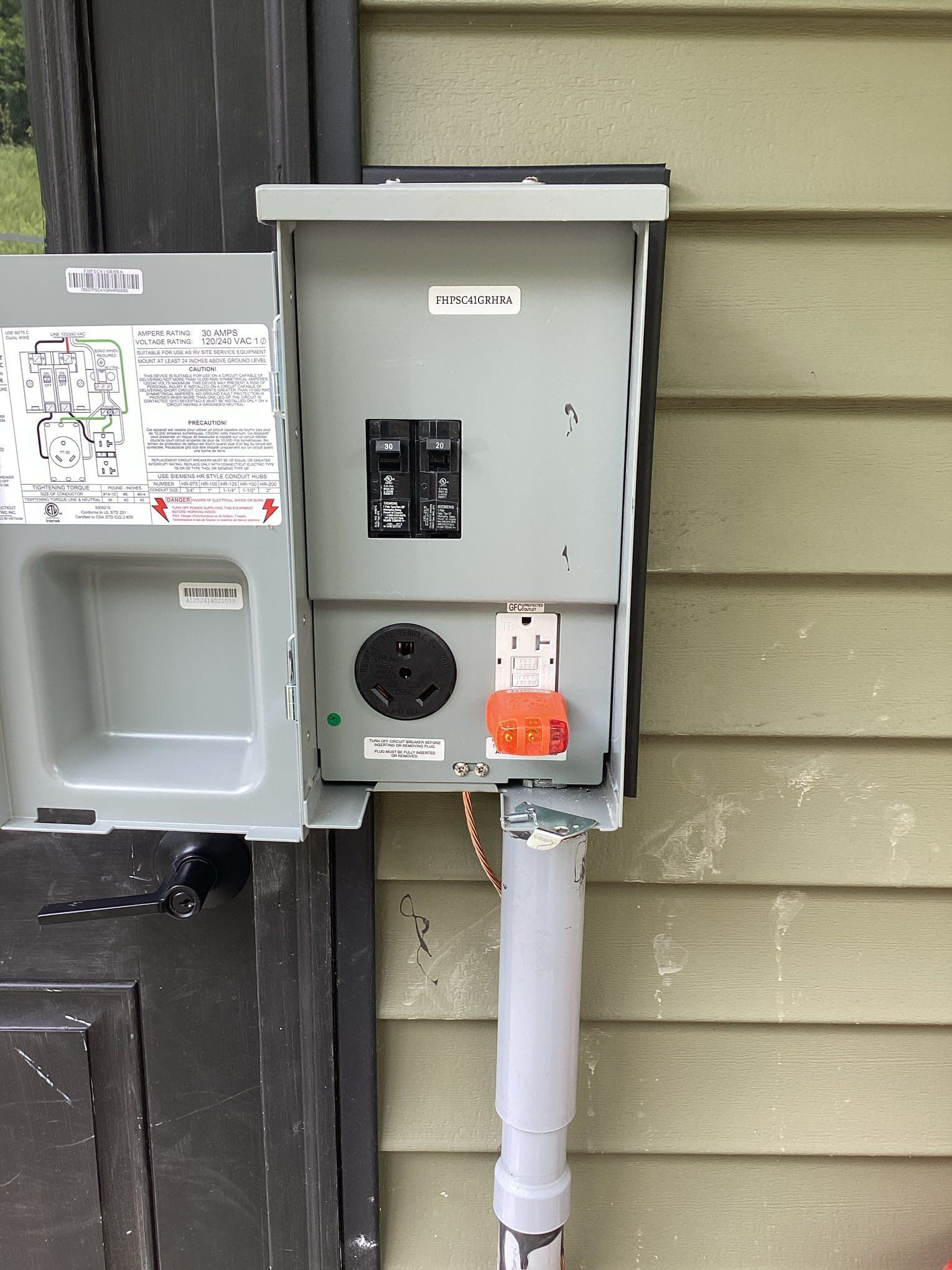
A properly installed EV charger delivers consistent charging power without causing voltage drop in other parts of the property or tripping breakers when your vehicle draws its full charging current. The installation includes securing the charger to a wall or post at a height that keeps the cable off the ground, positioning it within reach of your vehicle's charge port, and ensuring that the enclosure is rated for outdoor use if the charger is exposed to weather. Wire connections at both the charger and panel are torqued to manufacturer specifications to prevent overheating under sustained load.
After installation, your vehicle charges at the expected rate without interruption, and the rest of your property's electrical system continues to function normally even when the charger is operating. You'll notice that charging begins immediately when the vehicle is plugged in, the charger's indicator lights confirm proper operation, and the dedicated circuit handles the load without nuisance trips. Financing options are available to help manage the cost of both the charger and any necessary electrical upgrades.
The installation also includes labeling the new circuit at the panel and verifying that the charger communicates correctly with your vehicle. Some installations require coordination with the utility company if the total electrical load exceeds your current service rating, which may involve upgrading the meter base or service entrance cable before the charger can be connected.
What Property Owners Usually Ask
EV charger installations involve electrical considerations that differ from typical circuit additions, and understanding those factors helps property owners prepare for the project.
What determines whether my electrical panel can support an EV charger?
The panel must have available breaker slots and sufficient service capacity to handle the charger's continuous load. This is calculated by adding the charger amperage to your property's existing electrical demand and comparing the total to your service rating.
How is the installation different for properties with older electrical systems?
Older panels may lack the capacity or physical space for a high-amperage charger circuit, requiring a panel upgrade or subpanel installation. The service entrance cable must also be sized to handle the additional load, which sometimes means upgrading the main service.
What happens during the installation process?
Installation involves running a dedicated circuit from the panel to the charger location, mounting the charger securely, making connections at both ends, and testing the system under load. The work includes pulling a permit and coordinating a final inspection to verify code compliance.
Why do some EV charger installations require service upgrades in Maine?
Many residential properties in the area have 100-amp or 150-amp services that were sized for typical household loads. Adding a 40 or 50-amp EV charger can exceed that capacity, especially during peak electrical use, requiring a service upgrade to 200 amps.
Can the charger be installed outdoors?
Yes, as long as the charger is rated for outdoor use and the installation includes weatherproof conduit, a GFCI breaker or outlet, and proper mounting to prevent water intrusion. Outdoor installations also require positioning the charger where it's protected from direct snow accumulation and accessible during winter months.
Tesla Electric Company LLC brings experience with newer electrical technologies to every EV charger installation, treating the project as an electrical system upgrade rather than a simple outlet addition. Call (207) 855-8824 to discuss your charging needs and schedule an evaluation.